Luo Laughter "I speak of Africa and golden joys"


Wednesday, 7 July 2021

Elephants to be moved from UK zoo to Kenyan wild in 'world first'.


An entire herd of elephants from a British zoo will be released into the wild in Kenya in what conservationists have hailed as a world first.

The 13 elephants live at Howletts Wild Animal Park in Kent, southern England, and will be flown more than 7,000 kilometers (4,350 miles) to Kenya, according to a press release from animal conservation charity the Aspinall Foundation Tuesday.  Twelve of the elephants were born and raised in Kent and one was born in Israel. None of the animals have ever lived in the wild.  The group weighs 25 tons in total and includes three calves. It will be the first time that a herd of elephants has been "rewilded" in the world, organizers say.
Rewilding aims to restore ecosystems to a natural state, and often involves the reintroduction of native animals.
The charity said that it hopes the project will discourage the global trade in elephants and encourage the return of animals to the wild where possible, adding that no elephants belong in captivity.
An entire herd of elephants from a British zoo will be released into the wild in Kenya in what conservationists have hailed as a world first.
The 13 elephants live at Howletts Wild Animal Park in Kent, southern England, and will be flown more than 7,000 kilometers (4,350 miles) to Kenya, according to a press release from animal conservation charity the Aspinall Foundation Tuesday.  Twelve of the elephants were born and raised in Kent and one was born in Israel. None of the animals have ever lived in the wild.
The group weighs 25 tons in total and includes three calves. It will be the first time that a herd of elephants has been "rewilded" in the world, organizers say.  Rewilding aims to restore ecosystems to a natural state, and often involves the reintroduction of native animals.
The charity said that it hopes the project will discourage the global trade in elephants and encourage the return of animals to the wild where possible, adding that no elephants belong in captivity.

The Aspinall Foundation is working on the project with the Sheldrick Wildlife Trust and the Kenya Wildlife Service, and two sites in the south of Kenya are under consideration for their release.
"This is an incredibly exciting project and a genuine world-first," said Damian Aspinall, chairman of the Aspinall Foundation, in the press release.
"As with any conservation project of this magnitude, there are obviously big risks, but we consider them well worth it to get these magnificent elephants back into the wild where they belong."
While rewilding elephants is "uncharted territory," according to the foundation website, other species have been released "very successfully." Last year the foundation sent two cheetahs back to the wild in South Africa, it added.
"Since the 1970s, we have been helping elephants, providing a wild future to more than 260 rescued orphans and operating extensive protection projects to ensure they, their wildborn babies and their wild kin are best protected throughout their lives," said Angela Sheldrick, CEO of the Sheldrick Wildlife Trust, in the press release.
"We look forward to offering that same opportunity to these 13 elephants when they set foot on African soil -- home, where they belong, and able to live wild and free as nature intended."
The elephants will be transported in individual cages customized to their needs, and vets will be on hand throughout the flight, according to the Aspinall Foundation website. Conservationists are raising funds for the project.
(from CNN)

Covid .... and now measles !


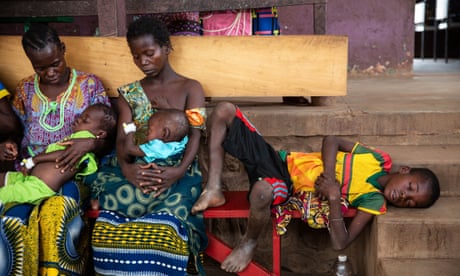
Kenyan children wait for their measles vaccine. Fewer than half of Kenyan children have had the required two doses
 

Kenya has restarted its vaccination programme in an effort to tackle the re-emergence of measles, which has surged in the country during the Covid restrictions.  A 10-day campaign against highly contagious measles and rubella has begun to target 4 million children aged nine months to five years in 22 of Kenya’s 47 counties where outbreaks are highest.

Measles is the “third most common cause of deaths among children from vaccine-preventable diseases”, the health ministry said. In 2020, only 85% of children in the east African country had received the first dose of the vaccine and less than 50% had had the second.   The exercise will involve 16,000 health workers at 5,061 vaccination centres.

An assessment conducted in Kenya with the support of the World Health Organization showed a big rise in the number of unvaccinated children. “The unprecedented increase in the number of unvaccinated children, accumulation of susceptible children to more than 2.1 million and the ongoing Covid-19 pandemic has aided outbreaks,” the ministry said.

According to the WHO, it takes at least 95% of the combined MCV1 and MCV2 vaccine coverage to prevent outbreaks. Across sub-Saharan Africa, however, the level of first doses being administered has stagnated at 69% since 2013. “Only seven countries in the region achieved 95% measles-containing vaccine coverage in 2019,” the WHO said.

Kenya’s 4 million children are among 16.6 million in Africa who missed supplemental vaccination against measles between January 2020 and April 2021, according to the WHO.

In April, the WHO reported of major outbreaks of measles in eight African countries that affected “tens of thousands” as efforts to contain Covid took centre stage.  “Children under five years can die from measles complications and if the virus circulation is not stopped, their risk of exposure increases daily. We know that vaccination is by far the best way to keep these children safe,” said Maniza Zaman, Unicef representative in Kenya.  The WHO also reported that the “quality of measles surveillance in Africa fell to the lowest level in seven years in 2020, with just 11 countries meeting their target”.

Dr Matshidiso Moeti, WHO regional director for Africa, said: “Recent outbreaks of measles, but also yellow fever, cholera and meningitis, all point to worrying gaps in immunisation coverage and surveillance in Africa. As we fight Covid-19, we cannot leave anyone dangerously exposed to preventable diseases. I urge all countries to double down on essential health services, including life-saving vaccination campaigns.”

According to the US Centers for Disease Control and Prevention, the number of global measles cases more than quadrupled to the highest in 23 years, from 132,490 in 2016 to 869,770 in 2019. Mortality rates almost doubled, with 207,500 reported deaths.

(report from The Guardian)

Wednesday, 23 June 2021

Covid Surge in Kisumu.


Queueing for Covid tests in Kisumu

 The pandemic is worsening in Africa as more contagious variants spread, vaccinations lag and hospitals in some places are pushed beyond their limits.

KISUMU, Kenya — Before Kenya’s president and other leaders arrived in late May to mark a major public holiday, health officials in Kisumu on Lake Victoria saw disaster brewing. Coronavirus infections were spiking, hospital isolation units were filling up and the highly contagious Delta variant had been found in Kenya for the first time — in Kisumu County.

Dr. Boaz Otieno Nyunya, the county executive for health and sanitation, said he and other health specialists argued and pleaded for the politicians to hold a virtual celebration and skip the mass, in-person events that can supercharge an outbreak. Just weeks earlier, huge political rallies had helped fuel the catastrophic Covid-19 wave in India, where the Delta variant first emerged and became dominant.

Their objections were waved away, the health officials said. President Uhuru Kenyatta, Deputy President William Ruto, the former prime minister Raila Odinga and others descended on Kisumudrawing large and mostly unmasked crowds who thronged the streets to watch their slow-moving motorcades through the city and gathered to hear them at marketplaces and parking lots.


(So can we blame the politicians who wanted publicity, for this surge in Coronavirus ?   Yes, sadly, I think we can .... but also the wananchi who surged in their thousands to see the politicians.   Much better to have cancelled the Madaraka Day celebrations for this year.)

With medical supplies depleted, vaccines scarce, doctors lamenting physical and mental fatigue and hospitals turning away patients for lack of beds or oxygen, health officials say they fear a wave like the one that ripped through India in April and May could be looming over Kisumu.

“The India example is not lost to us,” Dr. Nyunya said.

Though data on infections and deaths is spotty, more than 23 percent of the people tested for the virus in Kisumu last week were positive — more than double the national rate. Kenya’s overall positivity rate is similar to that of the United States when the pandemic peaked there in January. But the Delta variant was still rare then, the American health system is far more robust than Kenya’s and the U.S. government was ramping up vaccination on a grand scale.

All of Africa is vulnerable, as the latest wave of the pandemic sweeps the continent, driven in part by more transmissible variants. Fewer than 1 percent of Africa’s people have been even partially vaccinated, by far the lowest rate for any continent.

“I think the greatest risk in Africa is to look at what happened in Italy earlier on and what happened in India and start thinking we are safe — to say it’s very far away from us and that we may not go the same way,” said Dr. Mark Nanyingi, an infectious disease epidemiologist at the University of Liverpool in Britain. He called the surge in western Kenya a “storm on the horizon.”

Covid-related deaths in Africa climbed by nearly 15 percent last week compared to the previous one, based on available data from almost 40 nations, the World Health Organization said. But experts say the true scale of the pandemic far exceeds reported figures in Africa, where testing and tracing remain a challenge for many countries, and many nations do not collect mortality data.

To forestall the ongoing crisis, Kenya’s Ministry of Health last week imposed a restriction on gatherings and extended a dusk-to-dawn curfew in Kisumu and more than a dozen surrounding counties. But the measures were too late for Dr. Nyunya, who said that thinking back on the deliberations — which involved the county governor Peter Anyang’ Nyong’o, a former national health minister — over the celebrations last month, “It makes you feel impotent.”

In Uganda, which borders Kenya near Kisumu and has announced record cases and deaths, President Yoweri Museveni has imposed a strict 42-day lockdown. Just weeks ago, Rwanda hosted the Basketball Africa League and other big sporting events, raising the possibility for a full reopening. But after a spike in cases, the government introduced new lockdown measures on Monday.

The Democratic Republic of Congo — where the virus has claimed the lives of more than 5 percent of lawmakers ­— is grappling with a third wave as it falters in rolling out vaccines. South Africa, the continent’s worst-hit nation, has reported new infections doubling in just two weeks’ time, with the sharpest increases in major urban centers. Tunisia, where hospitals are full and oxygen supplies are low, is enduring a fourth wave.

“New, higher transmitting variants create a precarious situation in many countries that have weak health systems,” said Dr. Ngozi Erondu, a senior health scholar at the O’Neill Institute at Georgetown University.

The W.H.O. attributes the surge in Africa to lack of vaccination, insufficient adherence to precautionary measures like mask wearing and social distancing and the Delta and other variants.

In Kisumu, health officials first detected the Delta variant in early May, in factory workers who had arrived from India. Since then, it has spread to neighbouring counties, with doctors saying patients were presenting more severe symptoms than they encountered earlier in the pandemic.

(From The New York Times)

Wednesday, 2 June 2021

Kenya Brings Lakeside Port Back to Life

Kenya’s determination to build a multimodal transport system to serve the east Africa region has been boosted by the launch of the Kisumu port that was refurbished at a cost of $30 million.


President Uhuru Kenyatta said the port will facilitate the growth of economies in the region because it provides a holistic transport network for goods along the northern corridor from the port of Mombasa to countries like Uganda, Rwanda, Burundi, South Sudan, northern Tanzania and the Democratic Republic of Congo.

The revival of the port also involved the revamping of MV Uhuru, a wagon ferry, and the Kisumu Kenya Shipyard Limited, a state agency that will repair, refurbish and rehabilitate ships for use in Lake Victoria. The yard is also expected to embark on building another vessel, MV Uhuru 2, which will be used to ferry petroleum and petroleum products and other goods to neighboring countries. The port has also been equipped with forklift trucks, mobile cranes and tractor-trailers ready for imports and exports.

Also part of the newly commissioned facilities is a $4.3 million marine school that will train Kenyans and other East Africa nationals on the management of vessels and other marine activities.

“The revival of this port was informed by the need to revamp the economies of the East Africa region and beyond,” said President Uhuru.

Kenya, Uganda and Tanzania reckon that reviving the neglected and underdeveloped Lake Victoria transport infrastructure has the potential to generate $60 billion worth of trade annually. At present, it only generates $6 billion for the three countries combined.
The revival of the port in Lake Victoria creates a multimodal system involving road, rail and water. It will see goods entering the East Africa region through the port of Mombasa, transported via the standard gauge railway to Naivasha, and carried onwards to Kisumu through the rehabilitated meter gauge railway. Fuel tankers and cargo vessels will then ferry the goods to Uganda and northern Tanzania - countries that share the Lake Victoria shoreline - and can be transported onwards via road and train to other countries in the region.

The Lake Victoria port network also includes Mwanza, Musoma, and Bukoba in Tanzania and Entebbe and Port Bell in Uganda.

As part of the Kisumu port refurbishment, Kenya has invested $17 million to build the Kisumu oil jetty to facilitate easy transportation of petroleum products across the region and remove trucks from the road. Uganda has also contracted Mahathi Infra Uganda Ltd, a consortium of private investors, to build a $270 million liquid bulk jetty and accompanying infrastructure on its side.
“The revival of Kisumu port will improve Kenya's social and commercial relations with the neighboring countries and reposition Kisumu as Kenya’s frontier for regional trade and logistics,” said President Uhuru.

He added that with an international airport, a pier and a railway station, Kisumu will actualize the vision of deeper integration within the East African Community trading bloc.
(from 'The Maritime Executive')
~   ~   ~   ~   ~ 
I do hope that this project goes ahead and is successful, and that they can keep the port area free of the floating and choking water hyacinth that has spread all around the lake.   There was a project to turn it into paper but I've never found out if this has gone ahead.  

Monday, 24 May 2021

Nyirogongo erupts


What an awful sight; a wall of lava rushing towards your house .... 

Residents in the Democratic Republic of Congo have returned to destroyed houses after a large volcano erupted, with many searching for missing loved ones.

Mount Nyiragongo turned the sky red and spewed out a river of lava on Saturday, but stopped short of Goma, a city of two million just south of the volcano.

At least 15 deaths have been confirmed, but the number is likely to rise as officials reach the hardest-hit areas.

Nine of the victims died in a traffic accident as people fled.

Four others were killed as they tried to escape a prison while two were burned to death, government spokesman Patrick Muyaya said on Sunday.

More than 170 children are feared to be missing and 150 others had been separated from their families, according to Unicef, which said centres would be set up to help unaccompanied minors.


The lava halted near Buhene district, on the outskirts of Goma, burying hundreds of houses and even large buildings. Reconstruction efforts are likely to take months.

"All the houses in Buhene neighbourhood were burned," Innocent Bahala Shamavu told the Associated Press news agency.

Elsewhere, lava crossed one highway connecting Goma to the city of Beni, severing a key aid and supply route. However, the city's airport was untouched, despite earlier reports that it had been affected.

But seismic tremors had been felt in the aftermath, Mr Muyaya said. "People are advised to remain vigilant, avoid non-essential travel, and follow directions," he tweeted.

The volcano, located 10km (six miles) from Goma, last erupted in 2002, killing 250 people and making 120,000 homeless.

Residents started leaving their houses even before the government announced an evacuation plan. At night, crowds were seen fleeing on foot with mattresses and other belongings.

Rwandan authorities said more than 3,000 people had officially crossed from Goma. Some started to return on Sunday. Others went to higher ground to the west of the city.

One Goma resident, Richard Bahati, said he was in his house when he heard screaming and became extremely worried as he saw the sky reddening outside.

"I lived through the problem with this volcano in 2002. The volcano devastated all our homes and possessions," he said.


A local trader, Kambere Ombeni, was among those who returned to the scene as the rubble still smouldered. "We watched the whole neighbourhood in the Nyiragongo territory go up in smoke. The fire came right down to here. Even now we can still see lava," he said.

Another resident, Irene Bauma, said people would need help from the government to rebuild their lives.

"There's land, people, a population that has lost everything, maybe there are also deaths, who knows? We are asking the government to come and help the survivors of this eruption."

Tom Peyre-Costa, from the Norwegian Refugee Council in Goma, told the BBC what had happened.

"The lava was pretty slow, like, 1km/h, but it didn't stop.... It started burning the houses," he said, adding that humanitarian organisations were already trying to address people's needs.


Mount Nyiragongo is one of the world's more active volcanoes but there were concerns that its activity had not been properly observed by the Goma Volcano Observatory, since the World Bank cut funding amid allegations of corruption.

Professor Mike Burton, a volcanologist at the University of Manchester in England, told the BBC that the lava in Mount Nyiragongo is particularly fluid and has the potential to move fast.

In a report on 10 May, the observatory warned that seismic activity at Nyiragongo had increased.

Last year, the observatory's director, Katcho Karume, told the BBC World Service's Science in Action that the volcano's lava lake had been filling up quickly, increasing the chances of an eruption in the next few years. But he also warned that an earthquake could trigger a disaster earlier.

The volcano's deadliest eruption happened in 1977, when more than 600 people died.


(from BBC Africa news)


(An aerial photo from Reuters of the lava flow on the edge of the city of Goma)

Covid in western Kenya, May 2021 ...

(An old photo of the centre of Kisumu, from DW)

Kenya’s lake region has recorded a spike in COVID-19 infections as the area becomes the new epicenter of the disease in the east African nation, according to the Ministry of Health.

The counties in the region bordering Lake Victoria, namely Kisumu, Kakamega, Siaya, Bungoma, Nyamira, Busia, Migori, Homa Bay and Kisii, are accounting for up to 50 percent of daily infections, overtaking the capital Nairobi and the coastal city of Mombasa, which have been hotspots since the outbreak of the disease in March 2020.   On Saturday, Kisumu had the highest infections countrywide, recording 103 cases ahead of Nairobi, which had 61 out of the total 573 cases from a sample size of 5,798 tested in the last 24 hours, Mutahi Kagwe, the cabinet secretary, Ministry of Health said in a statement.  Similarly, Kisii recorded 28 cases, Busia 24, Kakamega 22, Bungoma 12, and Nyamira 9 as the disease spreads in the region.

The trend in the lake region has been recorded for over a week, with the area contributing 261 out of the 659 cases recorded on Friday out of a sample size of 6,972.   On Thursday, the lake region similarly recorded about 200 cases of the disease out of the 376 reported from a sample of 4,153.  The spike in COVID-19 cases in the region has been blamed on the Indian variant, which was first detected in Kisumu, with at least 20 cases confirmed.

Kenya’s confirmed positive cases stood at 168,108 on Saturday as cumulative tests conducted hit 1.8 million, said Mutahi. The country has vaccinated 952,967 persons as of Saturday.

(News item from Xinhua News Agency  Macao)

Saturday, 8 May 2021

Kenya starts its first national wildlife census ... report from Reuters


Kenya began its first national wildlife census on Friday, aiming to aid conservation and identify threats to its vast but threatened wildlife populations.

The census will run until July, with rangers, researchers and community members counting animals on land and from helicopters.

It will focus on counting rare species such as the pangolin, which has been identified as a potential intermediary species for COVID-19, and the Sable antelope, of which fewer than 100 remain in Kenya.

Expanding human settlements, a changing climate that makes resources scarcer, and poaching have contributed to declines in wildlife populations. Giraffe populations in Kenya have fallen about 40% over the last three decades, according to the Africa Wildlife Foundation.

The 250 million shilling ($2.3 million) project was launched by the Kenya Wildlife Service (KWS) and the tourism ministry at the Shimba Hills National Reserve, the coastal home of Kenya's last population of Sable antelopes.

Some of Kenya's most vulnerable animals, including rhinos and elephants, are counted periodically. But it will be the first time animals are counted systematically in all areas of the country.

"We know there are major gaps. We probably don't know much about what is going on in northern Kenya," said Winnie Kiiru, acting chairperson of the Kenya Wildlife Research Training Institute.

Detailed information about wildlife in northern Kenya's less populated and less visited parks is limited.

The aim is to better understand population sizes and their distribution, to identify threats to animals and suggest conservation strategies.

Tourism accounted for 8.2% of Kenya's GDP in 2019, according to the World Travel and Tourism Council, much of it from visits to nature parks, but has fallen drastically during the COVID-19 pandemic.

The plunge in international travel has also had some benefits. Last year was the first since 1999 in which no rhinos were poached, the KWS said.