Luo Laughter "I speak of Africa and golden joys"


Wednesday, 7 July 2021

Elephants to be moved from UK zoo to Kenyan wild in 'world first'.


An entire herd of elephants from a British zoo will be released into the wild in Kenya in what conservationists have hailed as a world first.

The 13 elephants live at Howletts Wild Animal Park in Kent, southern England, and will be flown more than 7,000 kilometers (4,350 miles) to Kenya, according to a press release from animal conservation charity the Aspinall Foundation Tuesday.  Twelve of the elephants were born and raised in Kent and one was born in Israel. None of the animals have ever lived in the wild.  The group weighs 25 tons in total and includes three calves. It will be the first time that a herd of elephants has been "rewilded" in the world, organizers say.
Rewilding aims to restore ecosystems to a natural state, and often involves the reintroduction of native animals.
The charity said that it hopes the project will discourage the global trade in elephants and encourage the return of animals to the wild where possible, adding that no elephants belong in captivity.
An entire herd of elephants from a British zoo will be released into the wild in Kenya in what conservationists have hailed as a world first.
The 13 elephants live at Howletts Wild Animal Park in Kent, southern England, and will be flown more than 7,000 kilometers (4,350 miles) to Kenya, according to a press release from animal conservation charity the Aspinall Foundation Tuesday.  Twelve of the elephants were born and raised in Kent and one was born in Israel. None of the animals have ever lived in the wild.
The group weighs 25 tons in total and includes three calves. It will be the first time that a herd of elephants has been "rewilded" in the world, organizers say.  Rewilding aims to restore ecosystems to a natural state, and often involves the reintroduction of native animals.
The charity said that it hopes the project will discourage the global trade in elephants and encourage the return of animals to the wild where possible, adding that no elephants belong in captivity.

The Aspinall Foundation is working on the project with the Sheldrick Wildlife Trust and the Kenya Wildlife Service, and two sites in the south of Kenya are under consideration for their release.
"This is an incredibly exciting project and a genuine world-first," said Damian Aspinall, chairman of the Aspinall Foundation, in the press release.
"As with any conservation project of this magnitude, there are obviously big risks, but we consider them well worth it to get these magnificent elephants back into the wild where they belong."
While rewilding elephants is "uncharted territory," according to the foundation website, other species have been released "very successfully." Last year the foundation sent two cheetahs back to the wild in South Africa, it added.
"Since the 1970s, we have been helping elephants, providing a wild future to more than 260 rescued orphans and operating extensive protection projects to ensure they, their wildborn babies and their wild kin are best protected throughout their lives," said Angela Sheldrick, CEO of the Sheldrick Wildlife Trust, in the press release.
"We look forward to offering that same opportunity to these 13 elephants when they set foot on African soil -- home, where they belong, and able to live wild and free as nature intended."
The elephants will be transported in individual cages customized to their needs, and vets will be on hand throughout the flight, according to the Aspinall Foundation website. Conservationists are raising funds for the project.
(from CNN)

Covid .... and now measles !


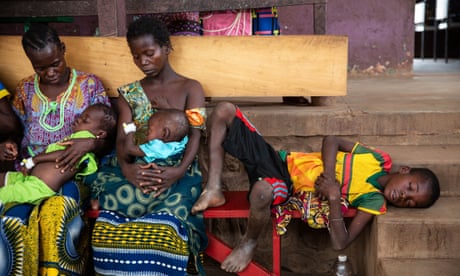
Kenyan children wait for their measles vaccine. Fewer than half of Kenyan children have had the required two doses
 

Kenya has restarted its vaccination programme in an effort to tackle the re-emergence of measles, which has surged in the country during the Covid restrictions.  A 10-day campaign against highly contagious measles and rubella has begun to target 4 million children aged nine months to five years in 22 of Kenya’s 47 counties where outbreaks are highest.

Measles is the “third most common cause of deaths among children from vaccine-preventable diseases”, the health ministry said. In 2020, only 85% of children in the east African country had received the first dose of the vaccine and less than 50% had had the second.   The exercise will involve 16,000 health workers at 5,061 vaccination centres.

An assessment conducted in Kenya with the support of the World Health Organization showed a big rise in the number of unvaccinated children. “The unprecedented increase in the number of unvaccinated children, accumulation of susceptible children to more than 2.1 million and the ongoing Covid-19 pandemic has aided outbreaks,” the ministry said.

According to the WHO, it takes at least 95% of the combined MCV1 and MCV2 vaccine coverage to prevent outbreaks. Across sub-Saharan Africa, however, the level of first doses being administered has stagnated at 69% since 2013. “Only seven countries in the region achieved 95% measles-containing vaccine coverage in 2019,” the WHO said.

Kenya’s 4 million children are among 16.6 million in Africa who missed supplemental vaccination against measles between January 2020 and April 2021, according to the WHO.

In April, the WHO reported of major outbreaks of measles in eight African countries that affected “tens of thousands” as efforts to contain Covid took centre stage.  “Children under five years can die from measles complications and if the virus circulation is not stopped, their risk of exposure increases daily. We know that vaccination is by far the best way to keep these children safe,” said Maniza Zaman, Unicef representative in Kenya.  The WHO also reported that the “quality of measles surveillance in Africa fell to the lowest level in seven years in 2020, with just 11 countries meeting their target”.

Dr Matshidiso Moeti, WHO regional director for Africa, said: “Recent outbreaks of measles, but also yellow fever, cholera and meningitis, all point to worrying gaps in immunisation coverage and surveillance in Africa. As we fight Covid-19, we cannot leave anyone dangerously exposed to preventable diseases. I urge all countries to double down on essential health services, including life-saving vaccination campaigns.”

According to the US Centers for Disease Control and Prevention, the number of global measles cases more than quadrupled to the highest in 23 years, from 132,490 in 2016 to 869,770 in 2019. Mortality rates almost doubled, with 207,500 reported deaths.

(report from The Guardian)